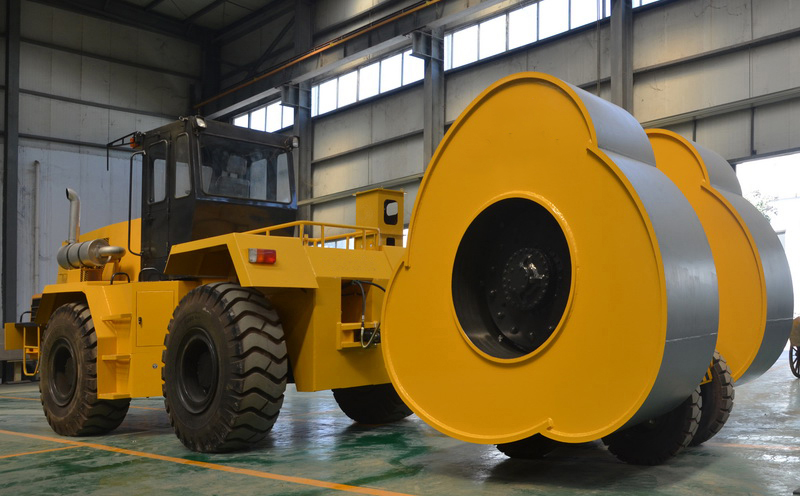
Road Compaction Equipment RFQ Guide for Contractors and Buyers
Home / Products / Road Compaction Equipment RFQ Guide for Contractors and Buyers
Road equipment procurement
Turn a product interest into a comparable supply scope.
A road compaction equipment RFQ should allow suppliers to understand the layer, material, work route and handover requirement before they propose a machine. A short request for “the best road roller price” often produces incomparable offers and leaves carrier, support and document assumptions hidden.
Use this guide to prepare a reviewable CMG enquiry for impact rollers, vibratory rollers, towed rollers or related support equipment. The final method remains subject to project engineering approval.
State the road type, layer, material, moisture condition, work area, access and the construction activity that follows. Include available investigation, specification or test information and identify which values are preliminary.
02
Define the equipment boundary
Specify whether the RFQ covers a roller only, a complete impact roller and tow tractor set, a vibratory or towed roller, a hydraulic system, monitoring, initial spare parts or another defined scope. Ask suppliers to list exclusions.
03
Provide interface and logistics data
Include existing tractor, carrier or power-unit information where relevant, as well as route, turning space, gradients, destination, unloading constraints and target delivery programme. Compatibility and transport data should be confirmed from source-matched documents.
04
Request the technical and commercial file
Ask for the applicable model specification, configuration or interface drawing, operating and maintenance guidance, spare-parts identification, packing scope, delivery basis, warranty information and communication responsibilities. Request certificates or reports only for the relevant approved scope.
Quotation checklist
Road type, layer and material
Moisture, work area and access conditions
Preferred method or open equipment comparison
Existing tractor, carrier or power-unit data
Documents, parts and support requested
Destination, delivery target and commercial basis
Decision record
Document the reasoning before equipment approval.
A review of road compaction equipment RFQ should identify the source of each project input, the party responsible for confirming it and the point in the programme when it becomes fixed. Material descriptions, equipment interfaces, access assumptions and requested documents should not be silently converted into supplier guarantees. Record open items so procurement can distinguish a preliminary discussion from an approved configuration.
Use the checklist on this page as a handover between the site, engineering, logistics and purchasing teams. When an input changes, return the change to the relevant decision owner and assess its effect on configuration, operating controls, delivery scope and verification. This creates a traceable route from the original search question to a quotation that can be compared and reviewed.
Before order placement, reconcile the proposed equipment, accessories, exclusions, documents and delivery responsibilities in one schedule. After delivery, use the approved supplied documents for inspection and operation. The website supports selection and communication, but it does not replace the contract, operating manual, site method statement or project acceptance specification for Road Compaction Equipment RFQ Guide for Contractors and Buyers.
Scope control
Compare like with like.
A generic roller category is not a complete RFQ scope.
Do not compare offers with different accessories or delivery boundaries.
Do not promise a road result without project evidence.
Do not treat supplier literature as the project acceptance specification.